A voxel volume is an object composed of volumetric elements called voxels (like volume pixels). Each voxel represents a value in a regular 3D grid. Unlike meshes and point clouds, voxel volumes describe space as a continuous grid rather than discrete surface elements or independent points.
Voxel volumes are characterized by:
- A regular 3D grid structure.
- Volumetric representation.
- Voxel-specific values like voxel size, density, etc.
Voxel Volumes in MeshInspector
When you load a voxel volume, it appears in the Scene tree and in the viewport. In the Scene tree, it is marked with a voxel-based icon, indicating that the object is a voxel volume.
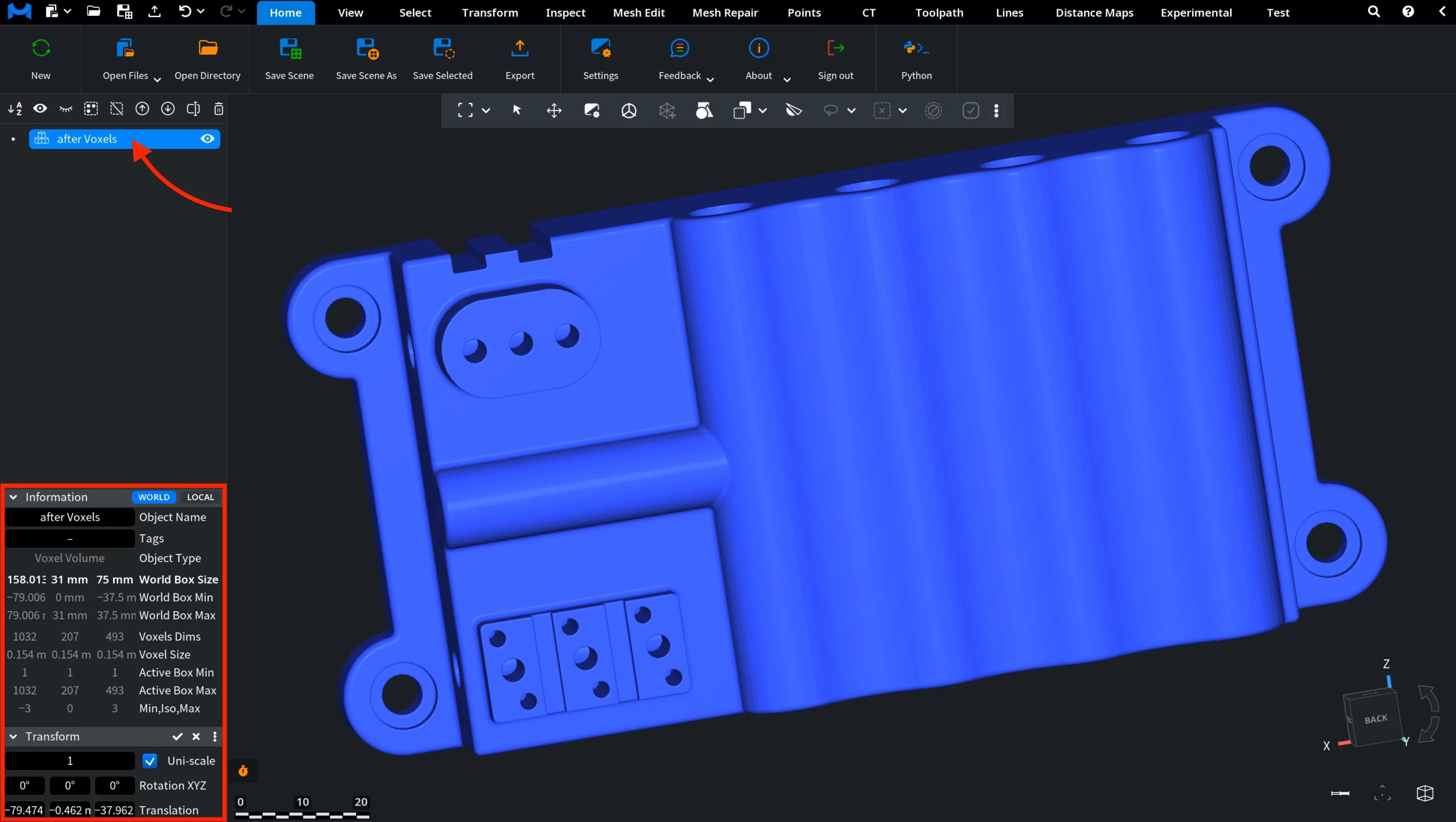
MeshInspector provides two key panels:
- Information displays properties, e.g., voxel dimensions, voxel size, bounding box, and value ranges.
- Transform allows you to scale, rotate, and translate the volume in 3D space.
These tools allow you to inspect both the structure and spatial positioning of voxel-based data.
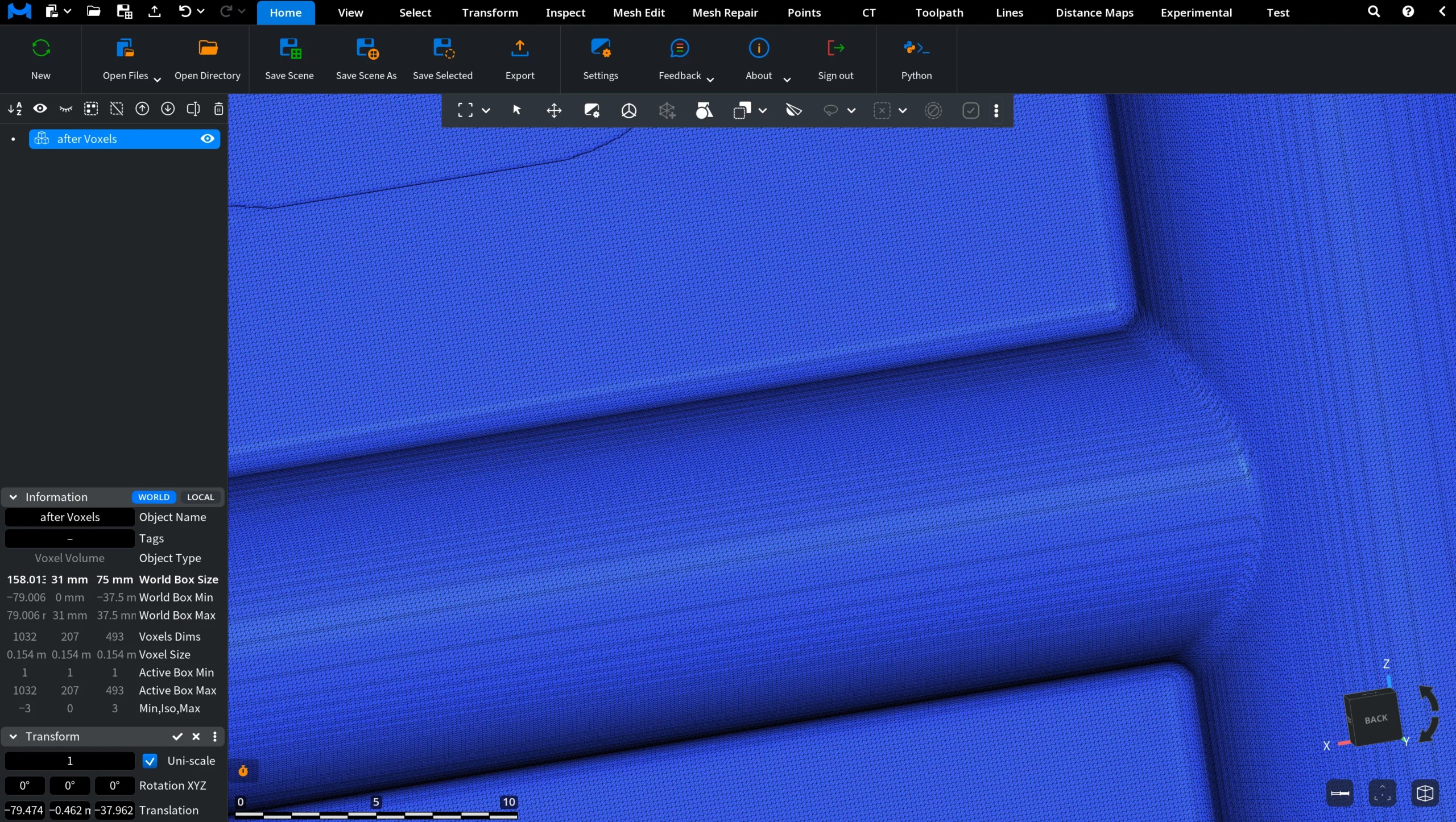
When working with voxel volumes, press L to visualize the voxel grid structure. Press L again to return to the default view.
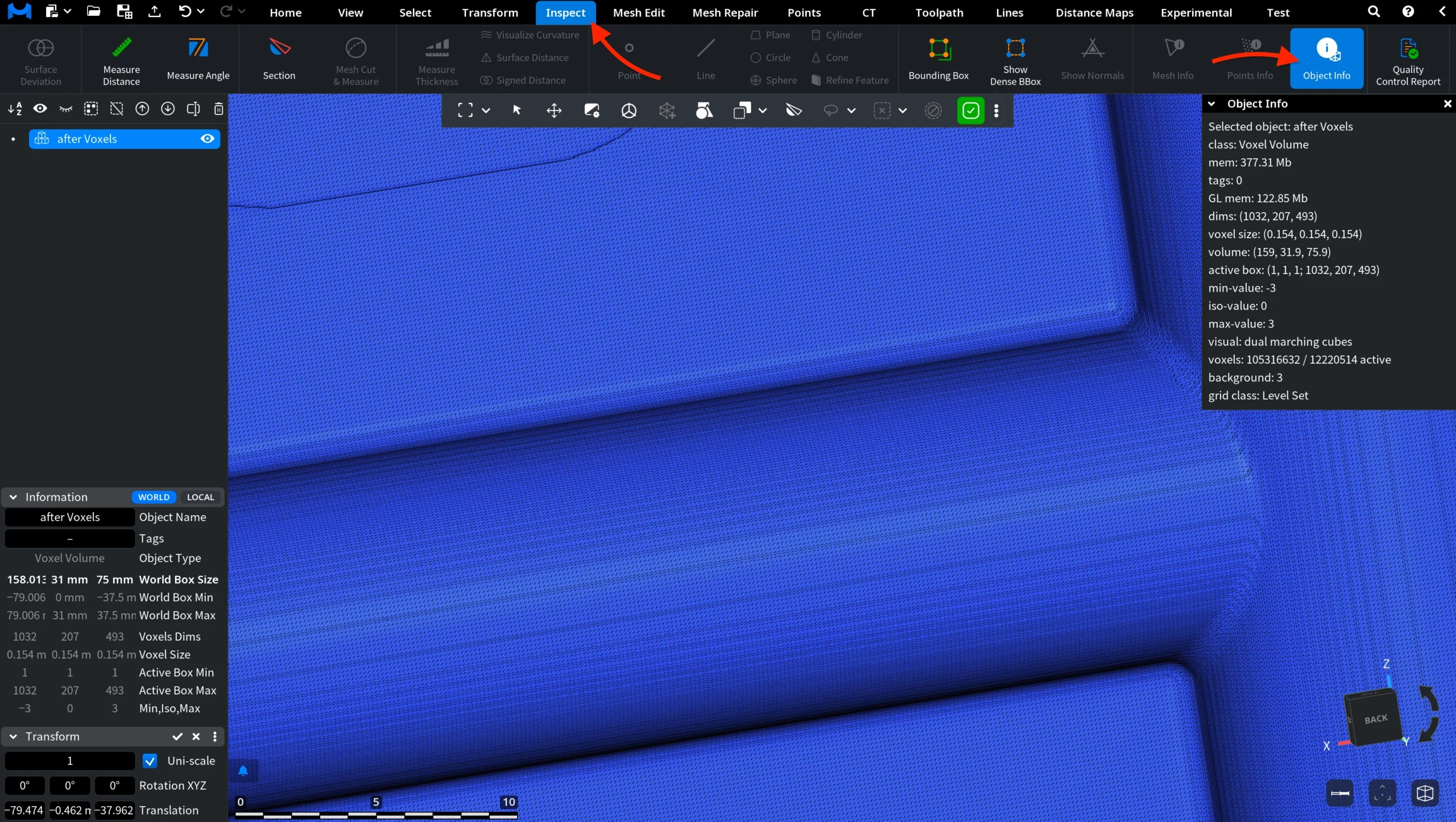
Under the Inspect tab, click Object Info to view detailed information about the voxel volume, including dimensions, voxel size, value range, and memory usage.
Right-click on the voxel volume in the Scene tree to open the context menu.
From here, you can control how the voxel volume is displayed and managed:
- Toggle visibility options for bounding box, clipping, transparency, and object name.
- Adjust display settings, including colors, opacity, and shading modes.
- Enable or disable local basis.
- Modify advanced rendering parameters, e.g., point size, shininess, ambient strength, and specular strength.
- Perform such actions as Remove and Clone the object.
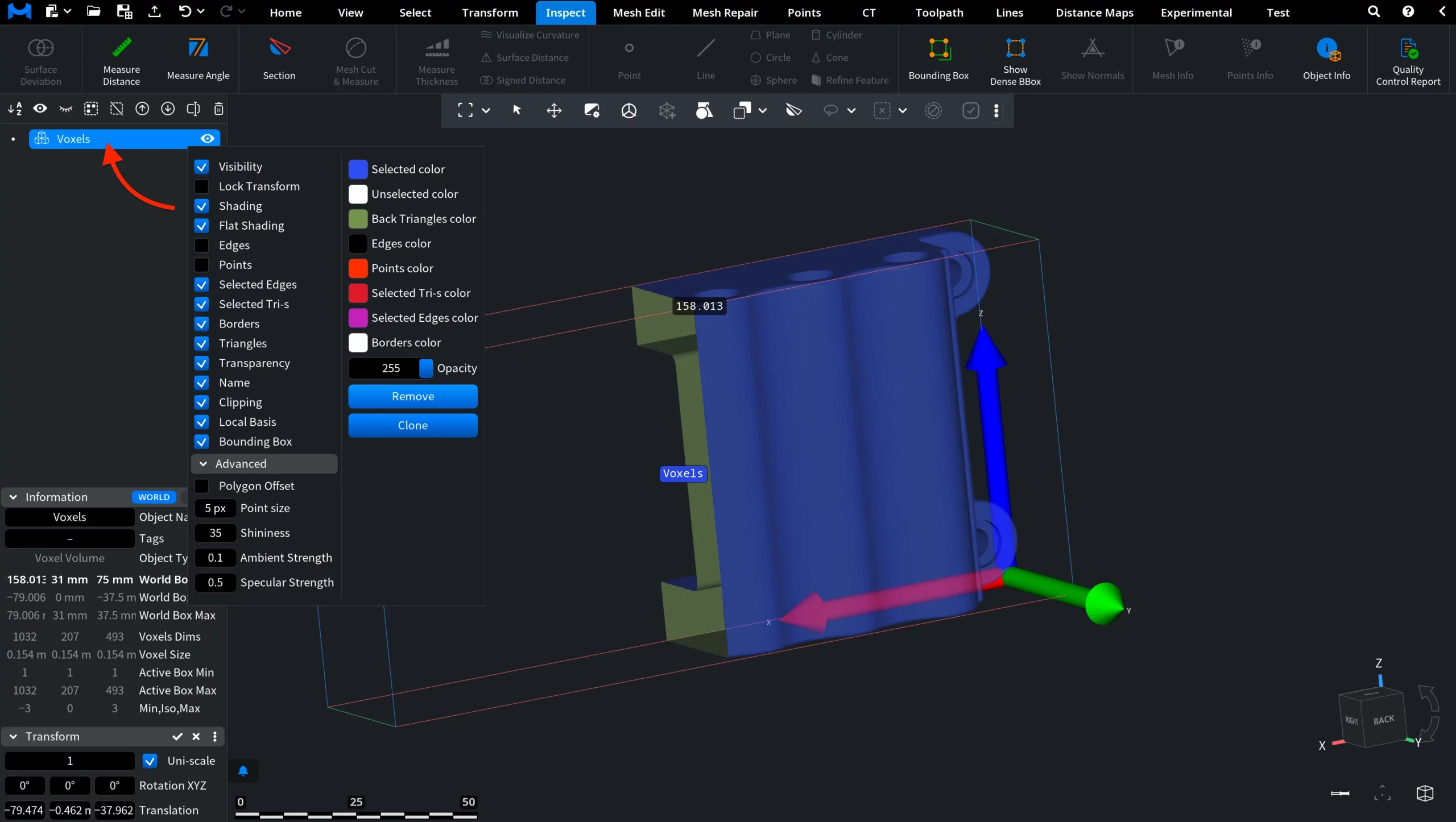
This menu provides quick access to both visualization settings and object-level operations for voxel volumes.
Voxels: CT in MeshInspector